The Wonders of Wild Alaskan Salmon
Scientific name: Salmoniformes
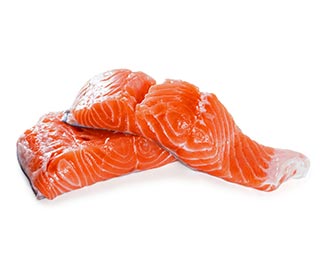
“Salmon” refers to fish in the order Salmoniformes, which thrive in the northern Atlantic and Pacific oceans. These marine creatures are anadromous: they are born in freshwater, migrate to the ocean and then return to freshwater to reproduce. They vary in appearance according to species; some are silvery-blue while others have black spots on their body.1
The natural diet of young salmon includes insects, plankton and invertebrates, while adults typically feed on squid, eels, other fish and shrimp. However, sockeye salmon stands out, as its diet consists almost entirely of plankton.2
There are many salmon species that exist, but when it comes to the nutrition profile, there’s only one variety that stands out: wild Alaskan salmon. Compared to farmed fish, this type of wild-caught salmon is an exemplary seafood choice. Keep reading to learn important facts about wild Alaskan salmon and its many benefits to your health.
The 5 Types of Alaskan Salmon
According to the Alaska Department of Fish and Game,3 there are five types of salmon species thriving in their waters: sockeye, chum, coho (silver), chinook (king) and pink.
All Alaskan salmon start their life as a fertilized egg laid in freshwater, where they eventually hatch. This life stage is called alevin, wherein the salmon have a large orange yolk sac attached to their bodies. This sac depletes as they grow, and at the same time, the fish develop a mouth and small, ovular shapes along each side of their bodies. The fish then leave the shelter of the gravel bed and swim around to look for food – this is known as the fry stage.
Each species of salmon fry stays in freshwater for a particular length of time. Sockeye and silver salmon stay in freshwater for a year or two, while pink and chum migrate to sea soon after emergence. King fry stay in freshwater for at least a year.
Once the salmon return to freshwater from the sea to lay eggs (called spawning), they undergo significant physical changes. Here’s how to set them apart:
- Sockeye salmon – Wild Alaskan sockeye salmon are known for the deep red color on their body. Their tail does not have significant coloration, but their head turns a bright greenish color. Male sockeyes also develop pronounced shoulders and a large kype (large, hooked jaws). Both spawning and ocean-phase sockeye can be seen with a white mouth and a white gum line.
- Chum salmon – It can be distinguished by the tell-tale calico bands, which are either deep purple, dull yellow or green, along each side of its body. Spawning chums and ocean-phase chums have a white mouth with a white gum line – which can make the latter hard to differentiate from an ocean-bright sockeye. Their distinct difference, though, is the chum’s white tip on the anal fin, deeply forked tail and a large pupil.
- Coho salmon – In their spawning phase, coho (also called silver) salmon are seen to have a deep reddish or maroon color all over their entire body, including the tail and head. Spawning-phase and ocean-adult cohos also have small black spots that run along the back and on the upper lobe of their tail. Coho also have a dark gray or blackish mouth with a white gum line.
- Chinook salmon – In both their ocean and spawning phases, chinook (king) salmon have a black mouth with a black gum line. Both lobes of their tail and their back are covered with black spots. The difference between Kings and coho is that the former’s tail spots cover both lobes, while a coho’s spots are only on the upper lobe of its tail.
- Pink salmon – This is the smallest of the five species. Pinks are identified by the large, ovular spots on their backs and on both lobes of their tail. Spawning males also have a very pronounced hump. Pinks have a white mouth with a black gum line.
Benefits of Wild Alaskan Salmon
Wild Alaskan salmon is a powerhouse of nutrition. According to research, consuming oily fish like wild Alaskan salmon once or twice a week may not only increase your lifespan by more than two years, but also reduce your risk of dying from cardiovascular disease by 35 percent.4
This is because Alaskan salmon is a rich source of vitamins and minerals, as well as lean protein and omega-3 fatty acids. Adding this food to your diet may reduce your risk of these conditions:
|
✓ Osteoarthritis and/or osteoporosis
|
✓ Depression
|
✓ Hypertension
|
|
✓ Age-related macular degeneration
|
✓ Diabetes
|
✓ Cancer
|
Just a 3-ounce serving of wild Alaskan salmon gives you 20 percent or more of the recommended daily allowance of vitamins B6 and B12, as well as niacin, which are all essential for metabolizing protein, carbohydrates and fats. These vitamins are needed for synthesizing hormones and neurotransmitters, supporting nervous system function and helping regulate other nutrients in the body.
You can also get good amounts of selenium, magnesium and phosphorus from wild Alaskan salmon. Phosphorus and magnesium are both essential for bone health, while selenium helps inhibit free radical damage and ensures DNA and cellular tissue health.
Meanwhile, the omega-3 fatty acids in wild Alaskan salmon are said to be linked to a lower risk of high blood pressure, high blood cholesterol, heart arrhythmia and cardiovascular disease.
However, remember that to reap these benefits, you must make sure to get true wild Alaskan salmon, and not the inferior farmed salmon.
Farmed Versus Wild Salmon: What’s the Difference?
In the United States, salmon is the third most frequently consumed seafood over the past decade, only surpassed by canned tuna and shrimp.5 But the alarming fact is that majority of the salmon in the U.S. is farmed – and instead of giving you health benefits, it may actually have dire repercussions on your health.
There are three particular reasons why farmed salmon, versus wild salmon, is not highly recommended:
• Nutritional content – Wild Alaskan salmon swim around in the wild, where they can consume what nature intended for them to eat, meaning their nutritional profile is more complete. Meanwhile, farmed salmon are fed an unnatural diet of grain products and other ingredients, as explained by Science Line below: 6
“Out in the ocean, salmon eat lots of small free-floating crustaceans, such as tiny shrimp. These crustaceans are filled with molecules called carotenoids, which show up as pigments all over the tree of life … It’s these carotenoids that account for the reddish color of the salmon, as well as the pink color of flamingoes and the red of a boiled lobster.”
Farmed salmon, however, aren’t fed crustaceans. Instead, they eat dry pellets that look like dog food. According to the Atlantic Canada Fish Farmers Association, salmon chow includes ingredients such as ’soybean meal, corn gluten meal, canola meal, wheat gluten and poultry by-products.’ Carotenoids, which are also essential for regular growth, can also be added to help give the fish its distinctive color.”
These synthetic foods are not what Mother Nature intended for fish to consume, and as a result, the nutritional content of their flesh changes. One obvious proof is that the levels of omega-3 fats in farmed salmon are significantly lower – as much as 50 percent – than wild salmon.
In addition, farmed salmon have at least five times high levels of omega-6 fat – which throws the omega 3:6 ratio off-kilter, wreaking havoc on people’s health.
• Fish health – While wild Alaskan salmon thrive in their natural habitat, returning to their native spawning grounds every year, farmed salmon are kept inside crowded pens all their lives, where they have very little room to move around and get exercise.
What’s more, cramming large numbers of fish in these pens allow diseases to spread quickly. Because farmed fish are often raised in pens in the ocean, pathogens can spread like wildfire and contaminate any wild fish swimming past.
• Effects on the environment - Almost 99 percent of farmed salmon are raised in net pens in the ocean. This means that all the excess food – along with the GE ingredients, pesticides and antibiotics – that is dropped in the pens ends up going out in the environment.
The documentary “Fillet-Oh-Fish” by Nicolas Daniel exposes this. Kurt Oddekalv, a respected Norwegian environmental activist, believes that salmon farming is detrimental to the marine life, and exposes the disasters this industry poses for both for the environment and for human health.
In the documentary, salmon farms dotted across the Norwegian fjords are shown – and below them, a 15-meter-high layer of waste that’s teeming with bacteria, pesticides and drugs, destroying the entire sea floor.
How to Identify Wild Versus Farmed Salmon
The best way to tell these two types of fish apart is simple: use your eyes and observe the flesh. Wild sockeye salmon have bright red flesh, thanks to the natural astaxanthin that they get from their natural diet. Meanwhile, farmed salmon are usually pale pink.
In addition, the fat marks of wild versus farmed salmon are significantly thinner. Wild salmon is actually very lean, so if you see salmon that’s pale pink with wide fat marks, then that’s likely a product of fish farms.7
Where to Buy Wild Alaskan Salmon
You can buy salmon in almost any supermarket, but beware – not all of them are the real deal. Salmon is often mislabeled and according to studies, as much as 70 to 80 percent of fish labeled “wild” are actually farmed. Even restaurants are jumping on the bandwagon, and calling their salmon “wild” on the menu, even if it came from fish farms.
A study from the conservation group Oceana demonstrated this. The researchers acquired 82 samples of salmon labeled "wild" from restaurants and grocery stores in New York, Chicago, Virginia and Washington, D.C. What they found is that 43 percent of the salmon was mislabeled, and 69 percent of the supposedly “wild” salmon was actually farmed Atlantic salmon.8
So if you want to buy wild salmon, don’t go directly to large supermarkets and restaurants. Instead, check your local health food stores or find a credible supplier online.
One example is Vital Choice Wild Seafood and Organics, which offers an impressive variety of high-quality salmon products that test high for omega-3 fats and low for contaminants. They also offer canned Alaskan salmon, which is a less expensive alternative to salmon fillets.
In addition, Consumer Reports recommends looking for salmon and other seafood that are certified by the Marine Stewardship Council.9 The MSC certification assures that every component of the manufacturing process, from harvesting of the raw materials to how the product is packaged, is scrutinized by MSC and audited independently to confirm that it meets the sustainable standards.
The two designations you should look for are "Alaskan salmon" and "sockeye salmon." Alaskan sockeye is not allowed to be farmed, so if you find it being sold, it's bound to be wild. Another good bet is canned salmon labeled "Alaskan Salmon."
Wild Alaskan Salmon Nutrition Facts
If acquired from trustworthy vendors who ensure their products’ quality and sustainability, you will surely reap the many benefits of wild salmon because of its many nutrients. Take a look at wild salmon’s nutrition profile below:10
Wild Alaskan Salmon Nutrition Facts
Serving Size: 100 grams
| Calories |
168 |
8% |
| Calories from Fat |
77.2 |
|
| Total Fat |
8.6 g |
13% |
| Saturated Fat |
1.5 g |
7% |
| Trans Fat |
|
|
| Cholesterol |
62 mg |
21% |
| Sodium |
47 mg |
2% |
| Total Carbohydrates |
0 g |
0% |
| Dietary Fiber |
0 g |
0% |
| Sugar |
0 g |
|
| Protein |
21.3 g |
43% |
| Calcium 1% |
Iron |
3% |
*Percent Daily Values are based on a 2,000 calorie diet. Your daily values may be higher or lower depending on your calorie needs.
You Can Use Wild Alaskan Salmon in Many Recipes
Wild salmon recipes are limitless. It’s actually one of the most versatile proteins you can use, as it can be fried, baked, grilled, boiled, poached, smoked, or added to burgers, salads or stews. It’s also flavorful enough to require a few herbs. In fact, some people only use salt and pepper to season their salmon before cooking, so they can enjoy its delicate flavor.
If you’re a novice in the kitchen and you’re not familiar on how to best cook this fish, you can check out this article on How to Cook Salmon. It will guide you on different techniques to serve and enjoy this fish, plus offers a handful of recipes that you can start out with.