-
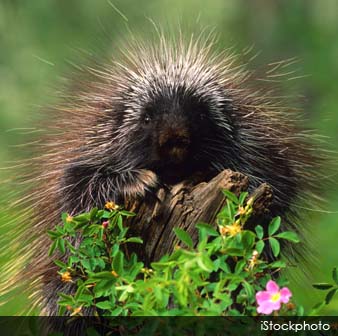 Porcupines
- Porcupines are found all over the U.S. If your dog runs into one of these rodents in the woods, those mean-looking quills can easily embed themselves in your pet's skin, causing pain and anxiety.
Typically, a lengthy visit to the vet is required to remove all the quills and treat any serious puncture wounds or infection.
- Porcupines are found all over the U.S. If your dog runs into one of these rodents in the woods, those mean-looking quills can easily embed themselves in your pet's skin, causing pain and anxiety.
-
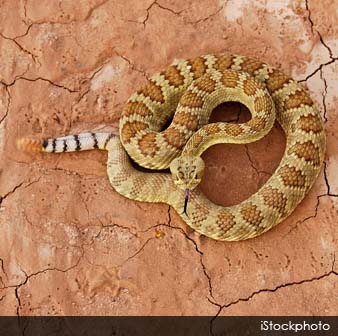 Rattlesnakes
- If you take your dog camping, hiking, or elsewhere in the great outdoors, you should be aware that rattlesnake bites pose a significant danger. The most common bite site on a dog is the muzzle. A rattler's venom causes swelling, oozing blood, and death of tissues. Bleeding problems can occur for several days following a bite and can put your dog's life at risk.
Rattlesnakes inhabit many regions throughout the U.S., but the variety considered most deadly, the Mojave rattler, is found in the Southwest.
If your dog is bitten by a rattlesnake, keep him quiet, limit his ability to move to inhibit the spread of venom, and get him to your vet or an animal emergency clinic immediately.
- If you take your dog camping, hiking, or elsewhere in the great outdoors, you should be aware that rattlesnake bites pose a significant danger. The most common bite site on a dog is the muzzle. A rattler's venom causes swelling, oozing blood, and death of tissues. Bleeding problems can occur for several days following a bite and can put your dog's life at risk.
-
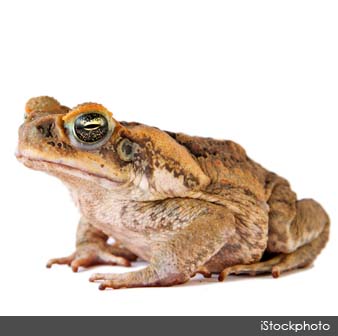 Bufo Marinus (Giant toads)
- The giant toad, also known as the Cane toad, Marine toad and Bufo toad, also poses a considerable danger for dogs. This toad produces a toxin on its skin that can cause heart failure in a dog who simply picks the toad up in its mouth. Symptoms of poisoning by a giant toad include pain, drooling, crying, bright red gums and loss of coordination.
Giant toads are found in Florida, Hawaii and the southern most areas of the U.S.
If your dog comes in contact with a giant toad, gently rinse her mouth out thoroughly with water. Pour or spray the water into the side of her mouth so it flows out the other side without getting into the throat. Seek veterinary attention right away.
- The giant toad, also known as the Cane toad, Marine toad and Bufo toad, also poses a considerable danger for dogs. This toad produces a toxin on its skin that can cause heart failure in a dog who simply picks the toad up in its mouth. Symptoms of poisoning by a giant toad include pain, drooling, crying, bright red gums and loss of coordination.
-
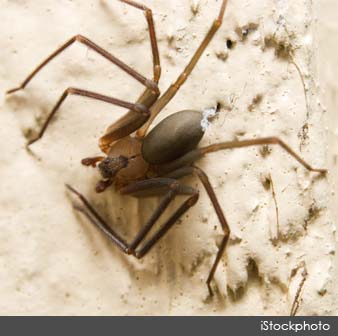 Brown Recluse Spiders
- The bite of this spider isn't immediately impressive, but the site of the bite soon develops into a large, deep wound that is difficult to treat. The injury can actually require surgery to heal properly, and in some cases causes permanent damage. Seek veterinary attention for your pet immediately if he's bitten by a brown recluse.
These spiders are most often encountered in states in the Midwest and south central regions of the U.S.
- The bite of this spider isn't immediately impressive, but the site of the bite soon develops into a large, deep wound that is difficult to treat. The injury can actually require surgery to heal properly, and in some cases causes permanent damage. Seek veterinary attention for your pet immediately if he's bitten by a brown recluse.
-
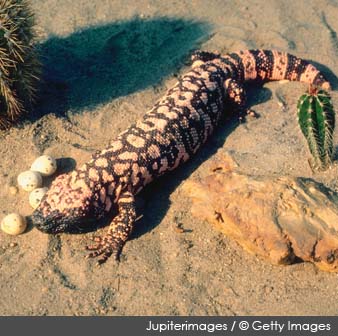 Gila Monsters
- Gila monster encounters are uncommon, but memorable. If your dog is unlucky enough to be bitten by one, the lizard will latch on, chew, and inject venom. Once latched on to your pet, a gila monster can be very hard to remove, and in fact, many dogs get rushed to the vet or emergency clinic with the creature still attached and chewing away. The bite is painful and can cause neurological signs. Fortunately, it is rarely life-threatening.
Gila monsters are found in the Southwest U.S. If your dog is bitten, don't pull the lizard off using force as this can leave teeth embedded in your dog's skin. Spraying water or rubbing alcohol on the lizard's nose will cause it to let go and drop off your dog.
- Gila monster encounters are uncommon, but memorable. If your dog is unlucky enough to be bitten by one, the lizard will latch on, chew, and inject venom. Once latched on to your pet, a gila monster can be very hard to remove, and in fact, many dogs get rushed to the vet or emergency clinic with the creature still attached and chewing away. The bite is painful and can cause neurological signs. Fortunately, it is rarely life-threatening.
-
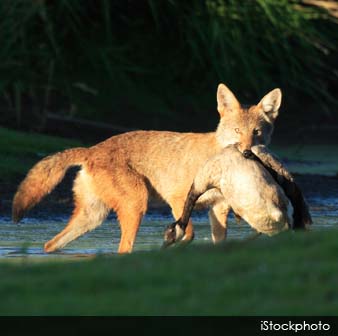 Coyotes
- Coyotes are predators that normally hunt small wild mammals. However, every spring and summer family pets also become prey for hungry or fearless coyotes.
Coyotes inhabit all of North America. If you live near undeveloped land where coyotes are likely to roam, you should keep a close eye on your pets when you let them outdoors — especially if they're small, and especially after dark. Coyotes will also be attracted to pet food left outside, garbage cans, and water sources like ponds or even a fountain in the yard.
- Coyotes are predators that normally hunt small wild mammals. However, every spring and summer family pets also become prey for hungry or fearless coyotes.
-
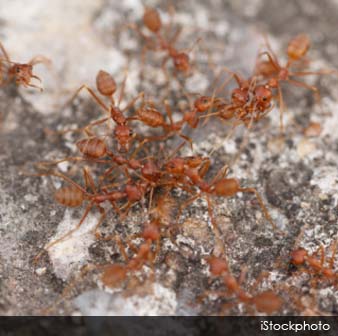 Fire Ants
- If you live in the southern U.S., you're probably familiar with fire ants. Dogs who sniff along the ground can run their noses right into a colony of fire ants. The bites of these ants really burn, and many dogs wind up seeing their vets for sore paws and noses.
Fire ant bites are painful and unpleasant, but they aren't usually serious. If your dog runs into a swarm of fire ants, rinse the sore area with cool water and call your vet for next steps, if necessary.
- If you live in the southern U.S., you're probably familiar with fire ants. Dogs who sniff along the ground can run their noses right into a colony of fire ants. The bites of these ants really burn, and many dogs wind up seeing their vets for sore paws and noses.
-
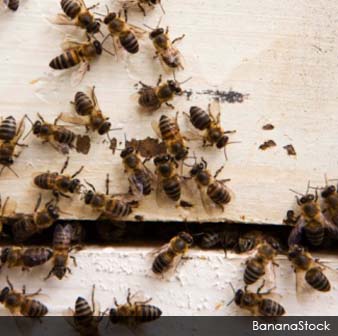 Bees
Bees- If your dog gets her first bee sting, she'll probably have a bit of pain from the sting and some mild swelling. However, subsequent bee stings can result in more severe reactions. Fatal reactions in canines are uncommon, but not unheard of. In addition, Africanized bees are very aggressive.
No matter where you live in the U.S., there are bees. Africanized honey bees are found in the Southwest, Florida, Arkansas, Oklahoma and Texas.
If your dog is stung by a bee, contact your vet immediately. If your pet can't be seen right away, give a child's dose of antihistamine to a small dog or an adult dose to a large dog.
- If your dog gets her first bee sting, she'll probably have a bit of pain from the sting and some mild swelling. However, subsequent bee stings can result in more severe reactions. Fatal reactions in canines are uncommon, but not unheard of. In addition, Africanized bees are very aggressive.
-
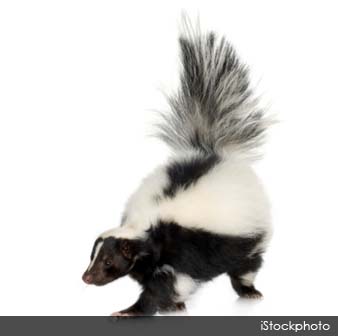 Skunks
- Most people think the only danger from skunks is the wildly stinky spray they release when threatened. But skunks also have very powerful front claws that can injure your pet. They can carry rabies as well.
If your pet encounters a skunk and gets sprayed, read here for the best way to get rid of the smell.
- Most people think the only danger from skunks is the wildly stinky spray they release when threatened. But skunks also have very powerful front claws that can injure your pet. They can carry rabies as well.
-
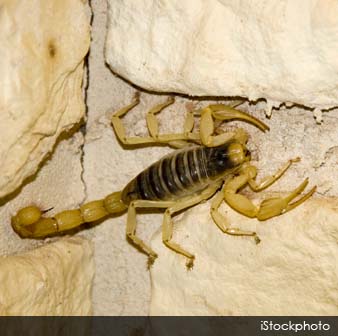 Scorpions
- Scorpions are found primarily in the southwestern U.S. and pose a real danger to both pets and people. If you live in an area where scorpions are common, keep a close eye on your pet. If he's tracking something on the ground, make sure it isn't a scorpion.
Scorpion venom can be deadly. If you suspect your pet has encountered a scorpion, if he's limping or seems sick after being outdoors, call your vet or an animal emergency clinic immediately.
- Scorpions are found primarily in the southwestern U.S. and pose a real danger to both pets and people. If you live in an area where scorpions are common, keep a close eye on your pet. If he's tracking something on the ground, make sure it isn't a scorpion.









